 |
 |
|
|
| DEPARTMENTS | |||

|
|||

|
|||

|
|||

|
|||

|
|||

|
|||

|
|||
| YOU CAN!... | |||
|
|||

|
|||
|
|||
|
|||
| MORE ABOUT HUNGER NOTES |
|||
 |
|||

|
|||

|
|||
|
|||
|
|||
|


Global issues: hunger, the environment, and climate change 2009
This page attempts to indicate the links between our earth and poor and hungry people.
A basic orientation to some key environmental issues was given by the BBC in its series Planet under Pressure. It covers six issues
We will add a seventh issue
-
"overconsumption"
We place overconsumption in quotes to indicate that it is a topic to be discussed, not assumed. Are patterns of consumption, especially in the developing countries, sustainable. Is there waste or meaningless consumption? What is the impact on very poor people?
The world's poor people confront all these issues. They struggle for food. A very large number live in countries where water is scarce. Though their energy demand is low, scarcity and high energy prices restrict their energy use, even for basics such as food preparation. Poor fisherman depend on fish species which are rapidly being depleted; and poor people often live in close proximity to species under threat, and vie with them for resources such as land. Pollution is a major problem for poor people, for example those in slums and who those who depend on water from polluted rivers. It is predicted that climate change will threaten coastal areas with flooding, and reduce rainfall in already rain short areas. Finally, people in developed countries, with their high standards of living, command many more resources and goods than poor people in developing countries, thus, it can be argued, increasing scarcity for poor people.
This report is divided into sections including:
Climate change, global warming and the effect on poor people
UN climate talks end without full accord--five big nations including US sign separate agreement Andrew C. Revkin and John M. Broder New York Times December 19, 2009 Climate talks stall as poorer nations walk out in protest Andrew C. Revkin and Matthew L. Wald New York Times December 14, 2009 See Hunger Notes special report: Hunger, the environment and climate change

The Milluni reservoir has receded as glaciers that provide some of Bolivia's water and electricity have melted and disappeared. Photo: Ángel Franco/The New York Times
In Bolivia, climate change threatens glaciers, water supply Elizabeth Rosenthal New York Times December 8, 2009

Developed countries at the Copenhagen climate summit were accused of 21st century "carbon colonialism" today over a draft agreement that developing nations say would discriminate against them. Photo: Attila Kisbenedek/AFP/Getty
Copenhagen Summit: wealthy nations accused of 'carbon colonialism'
The link between undernutrition and climate change IRIN News December 7, 2009
Climate deal likely to bear big price tag John M. Broder New York Times December 8, 2009

Over 19 million children face hunger-related death at any given moment but only three percent receive treatment. Photo: Anna Jefferys/IRIN
The link between undernutrition and climate change IRIN News December 7, 2009
Binding treaty no longer a realistic goal for climate summit, UN chief concedes Ben Webster Times Online November 4, 2009

Key ways in which current farming practices harm the earth
include loss of biodiversity, overuse of chemicals and pesticides, and loss of
plant and animal habitat due to the expansion of farming. The loss of
biodiversity as a result of current farming practices includes an estimated loss
of three-quarters of the genetic diversity in agricultural crops over the
last century. Photo: Jane Some/IRIN
Feeding the world without harming it IRIN November 3, 2009
The environmental cost of having children is high David A. Fahrenthold Washington Post September 15, 2009

David and Sharon Wakefield show the damage a lack of water has caused their farm in California's Central Valley. Farmers like the Wakefields have been restricted to just 10% of the water they had last year. Water for the Central Valley comes in large part from the Sacramento-San Joaquin Delta, and a court ruled last year that water diversion to the Central Valley must be reduced in order to protect the health of the delta ecosystem. Photo: BBC
California farms revert to dust as water runs out BBC News August 24, 2009

A picture clearly showing the tree cutting in order to plant crops that is denuding the Amazon. Photo: New York Times
Is paying farmers in the Amazon money not to cut down trees an option to reduce climate change? Elizabeth Rosenthal New York Times August 21, 2009

A boy rested on the mud in a dried-up section of the Euphrates River near Jubaish, Iraq, in June. Photo: Moises Saman for The New York Times
Iraq suffers as the Euphrates river dwindles Campbell Robertson New York Times July 13, 2009
World leaders fail to agree specific target for climate cuts--agree only to 'substantially reduce' global emissions by 2050 Patrick Wintour and Larry Elliott Guardian.co.uk July 8, 2009 Poorer nations reject a target on emission cut Peter Baker New York Times July 8, 2009
Global warming causes 300,000 deaths a year, study says John Vidal The Guardian May 29, 2009

A boy stands in parched corn field near Harare, Zimbabwe. Photo: Associated Press
Could food shortages bring down civilization? The biggest threat to global stability is the potential for food crises in poor countries to cause government collapse. Lester Brown Scientific American May 2009 Climate change resulting in drought, population growth, and neglect of developing country agriculture will cause billion-person famines in next 40 years, US scientist says Lewis Smith Times Online March 23, 2009
Long droughts, rising seas predicted despite future CO2 curbs Juliet Eilperin Washington Post January 27, 2009

Blackwater National Wildlife Refuge on Maryland's Eastern Shore is among the many coastal marshes that would be inundated by rising sea levels. Photo: Andrea Bruce/Washington Post
Global warming will reduce or eliminate the benefit of many current wildlife refuges. For example, marshes and other coastal areas are likely to be drowned by rising sea levels, eliminating refuges in such areas as useful habitat for migrating birds and many other species. Juliet Eilperin Washington Post January 25, 2009

The tropical deforestation in Asia is driven primarily by the fast-growing demand for timber. In Latin America, by contrast, it is the growing demand for soybeans and beef that is deforesting the Amazon. In Africa, it is mostly the gathering of fuel wood and the clearing of new land for agriculture as existing cropland is degraded and abandoned. Two countries, Indonesia and Brazil, account for more than half of all deforestation. Photo: AFP
Planting trees and managing soils to sequester carbon Lester R. Brown Earth Policy Institute January 11, 2009
European leaders agree on package of laws aimed at cutting greenhouse gases by one-fifth within 12 years Ian Traynor The Guardian December 12, 2008 Next climate summit may turn on rich nations approach to poor ones Juliet Eilperin Washington Post December 13, 2008
US joins G-8 plan to (try to) halve emissions (by 2050!) Michael Abramowitz Washington Post July 9, 2008 (You will leave this site.)
Climate change likely to trigger global destabilization, US intelligence report says Greg Miller Los Angeles Times June 26, 2008 (You will leave this site.) See the full report

Coral reefs can provide fish and a sea defense, or be excavated for building. Photo: AP
Nature loss to hurt global poor-- damage to forests, rivers, marine life and other aspects of nature could halve living standards for the world's poor, a major report is to conclude Richard Black BBC News May 29, 2008 (You will leave this site.) See The Economics of Ecosystems & Biodiversity report.
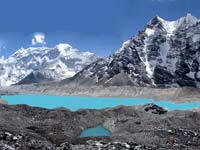
Warmer temperatures are causing shrinkage in Himalayan glaciers, with a consequent effect on water supply and food production in India. Photo UNEP
Melting mountain glaciers will shrink grain harvests in China and India Lester R. Brown Earth Policy Institute March 31, 2008

In oil-rich Niger delta, gas flares form the backdrop to everyday life. Residents talk of infections and acid rain due to the flames. Photo: Karin Brulliard/Washington Post
In oil-rich Niger delta, the sun never sets, as smokestacks still shoot out gas flares Karin Brulliard Washington Post August 30, 2009
With something for everyone (compromises, carveouts and out and out gifts), energy bill passes the House John M. Broder New York Times June 30, 2009

Members of an indigenous group opposed to Peru’s plans to open large parts of the Amazon to drilling and logging demonstrated Thursday in Iquitos, Peru. Photo: Tomas Munita/New York Times
Peru prime minister to step down over handling of Amazon crisis Reuters July 4, 0009 Protesters gird for long fight over opening Peru’s Amazon Simon Romero New York Times June 11, 2009 9 hostage officers killed at Peruvian oil facility--Amazonian Indians demand that Peruvian president withdraw decrees that ease the way for companies to carry out major energy and logging projects in the Amazon Simon Romero New York Times June 6, 2009

Palm oil is one of the biofuels stirring controversy. Photo: AFP
Biofuel use increasing poverty, Oxfam report says BBC News June 25, 2008 (You will leave this site.) See full report
Can capitalism survive climate change? Walden Bello Foreign Policy In Focus April 5, 2008

Inspections are being stepped up to try to stem deforestation. Photo: BBC

The Amazon has long been known as the "lungs of the world." Rising commodity prices have prompted the huge rise in the rate of deforestation. Photo: BBC
Brazil Amazon deforestation soars BBC News January 24, 2008 (You will leave this site.) Pressures build on Amazon jungle Gary Duffy BBC News January 14, 2007 (You will leave this site.)
Other environmental issues in developing countries
Pastoralism unraveling in Mongolia due to low wool prices and high number of goats, creating environmental damage Sarah J. Wachter New York Times December 8, 2009

The Ogiek are traditionally forest dwellers, hunting antelope with homemade bows and harvesting honey. In the past 15 years, because of ill-planned settlement schemes (the government essentially handed out chunks of forest to cronies), 25 percent of the trees in the Mau forest have been wiped out. Photo: Tim Freccia/New York Times
Ogiek tribesman may be driven from their ancestral forest home in Kenyan plan Jeffrey Gettleman New York Times November 14, 2009

A grove of huarango trees sits amid the sand dunes at the edge of Ica, Peru. The trees help balance the arid valley, capturing moisture coming from the west. Nonetheless, villagers are cutting down the last remaining trees. Photo: Tomas Munita/New York Times
The ecosystem in Peru is losing a key ally--the huarago tree Simon Romero New York Times November 7, 2009 Cutting down huarango forests caused the collapse of the Nazca civilization 1500 years ago Jody Bourton BBC News November 2, 2009
Mexico City's water shortage worsens Nicholas Casey Wall Street Journal September 12, 2009
In poorer nations, energy needs trump climate issues Emily Wax Washington Post September 9, 2009
A boy rested on the mud in a dried-up section of the Euphrates River near Jubaish, Iraq, in June. Photo: Moises Saman for The New York Times
Iraq suffers as the Euphrates river dwindles Campbell Robertson New York Times July 13, 2009
Mumbai (Bombay) faces acute water shortage BBC News July 7, 2009

Using a mix of grass-roots activism, lawsuits and old-fashioned lobbying, Dr. Yuri Melinihi and his organization tackle issues from illegal logging in protected forests and the impact of a growing mining industry to the supply and cleanliness of water. Photo: Peter Morrison / Associated Press
Bullets don't stop Guatemala green activist. Shot 7 times by an unknown assailant, his enemies include drug traffickers, midnight loggers, mining giants and corrupt military men. Ken Ellingwood Los Angeles Times June 11, 2009

Construction begins on one of two massive hydroelectric dams that are to span the Madeira River, helping the government feed the nation's appetite for electricity. But the project has been widely criticized by social and environmental groups for its potential damage to the environment, river residents and nearby indigenous tribes. Photo: Andre Penner/Associated Press
Doubt, anger over Brazil dams--many question environmental costs Joshua Partlow Washington Post October 14, 2008
Filipinos draw power from geothermal energy Blaine Harden Washington Post October 3, 2008
A key environmental but also human welfare issue is genetic diversity of the plants that we depend on for life, and the human impact on these plants. The key world-wide issue is the end or very near end to a vast number of genetic varieties of plants, due to the world market in plant foods such as wheat, corn and potatoes. The problem is a conflict between ordinary farmers and genetic diversity and the market. Farmers have been growing things for hundreds of years, even millennium, in specific locations. The plants have adapted to these locations, which are more than a variety of tourist destinations, but also include adjustments to soil types and insect and other predators. On the market side, specific characteristics have been selected for, such as high yield, without sufficient concern for other characteristics which may take several or many years to reveal themselves, such as disease resistance. The problem is compounded by the insensitivity of the market to such 'hypothetical' or long run dangers, and the fact that in the market, lower cost trumps everything or at least is a very powerful hand, so much so that a few varieties have taken over production of key crops. If a disease or other problem--think the Irish potato famine--occurs, many people will be in difficulty.

In this chamber and two others, millions of seeds will be protected from natural and man-made disasters. The Svalbard Global Seed Vault was built to withstand an earthquake or nuclear strike. Photo: John Mcconnico/ AP
Earth's future rests on the seeds we save Adrian Higgins Washington Post March 6, 2008 (You will leave this site, be required to register once with the Post and thereafter sign in using your email address.)

The rate of mangrove loss is higher than the loss of any other forest type. Mangroves protect coastal areas against erosion, cyclones and wind. Mangrove forests provide habitats for many animals like crocodiles and snakes, tigers, deer, otters, dolphins and birds. A wide range of fish and shellfish also depends on these coastal forests. Photo: FAO
An alarming 20 percent of mangrove forest area has been destroyed since 1980 Food & Agriculture Organization February 8, 2008
Nature loss 'dwarfs bank crisis' Richard Black BBC News October 10, 2008

The seas are one of the ecosystems threatened by human activities. 'Within our lifetime, hundreds of species could be lost as a result of our own actions' Julia Marton-Lefevre, IUCN Photo: Simon Goodman/Leeds University
Mammals facing extinction threat Richard Black BBC News October 6, 2008

'Food flowers' would carry at-a-glance information
Foods 'should label eco-costs' Jennifer Carpenter BBC News September 8, 2008 (You will leave this site.)
2008 Global issues: the earth, the environment, and poor people