 |
 |
|
|
| DEPARTMENTS | |||

|
|||

|
|||

|
|||

|
|||

|
|||

|
|||

|
|||
| YOU CAN!... | |||
|
|||

|
|||
|
|||
|
|||
| MORE ABOUT HUNGER NOTES |
|||
 |
|||

|
|||

|
|||
|
|||
|
|||
|


2008 Global issues: the earth, the environment, and poor people
This new page attempts to indicate the links between our earth and poor people.
A basic orientation to some key environmental issues was given by the BBC in its series Planet under Pressure. It covers six issues
We will add a seventh issue
-
"overconsumption"
We place overconsumption in quotes to indicate that it is a topic to be discussed, not assumed. Are patterns of consumption, especially in the developing countries, sustainable. Is there waste or meaningless consumption? What is the impact on very poor people?
The world's poor people confront all these issues. They struggle for food. A very large number live in countries where water is scarce. Though their energy demand is low, scarcity and high energy prices restrict their energy use, even for basics such as food preparation. Poor fisherman depend on fish species which are rapidly being depleted; and poor people often live in close proximity to species under threat, and vie with them for resources such as land. Pollution is a major problem for poor people, for example those in slums and who those who depend on water from polluted rivers. It is predicted that climate change will threaten coastal areas with flooding, and reduce rainfall in already rain short areas. Finally, people in developed countries, with their high standards of living, command many more resources and goods than poor people in developing countries, thus, it can be argued, increasing scarcity for poor people.
This report is divided into sections including:
Climate change, global warming and the effect on poor people
European leaders agree on package of laws aimed at cutting greenhouse gases by one-fifth within 12 years Ian Traynor The Guardian December 12, 2008 Next climate summit may turn on rich nations approach to poor ones Juliet Eilperin Washington Post December 13, 2008
US joins G-8 plan to (try to) halve emissions (by 2050!) Michael Abramowitz Washington Post July 9, 2008 (You will leave this site.)
Climate change likely to trigger global destabilization, US intelligence report says Greg Miller Los Angeles Times June 26, 2008 (You will leave this site.) See the full report

Coral reefs can provide fish and a sea defense, or be excavated for building. Photo: AP
Nature loss to hurt global poor-- damage to forests, rivers, marine life and other aspects of nature could halve living standards for the world's poor, a major report is to conclude Richard Black BBC News May 29, 2008 (You will leave this site.) See The Economics of Ecosystems & Biodiversity report.
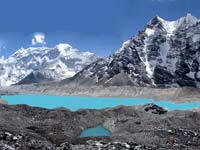
Warmer temperatures are causing shrinkage in Himalayan glaciers, with a consequent effect on water supply and food production in India. Photo UNEP
Melting mountain glaciers will shrink grain harvests in China and India Lester R. Brown Earth Policy Institute March 31, 2008

Palm oil is one of the biofuels stirring controversy. Photo: AFP
Biofuel use increasing poverty, Oxfam report says BBC News June 25, 2008 (You will leave this site.) See full report
Can capitalism survive climate change? Walden Bello Foreign Policy In Focus April 5, 2008

Inspections are being stepped up to try to stem deforestation. Photo: BBC

The Amazon has long been known as the "lungs of the world." Rising commodity prices have prompted the huge rise in the rate of deforestation. Photo: BBC
Brazil Amazon deforestation soars BBC News January 24, 2008 (You will leave this site.) Pressures build on Amazon jungle Gary Duffy BBC News January 14, 2007 (You will leave this site.)
Other environmental issues in developing countries

Construction begins on one of two massive hydroelectric dams that are to span the Madeira River, helping the government feed the nation's appetite for electricity. But the project has been widely criticized by social and environmental groups for its potential damage to the environment, river residents and nearby indigenous tribes. Photo: Andre Penner/Associated Press
Doubt, anger over Brazil dams--many question environmental costs Joshua Partlow Washington Post October 14, 2008
Filipinos draw power from geothermal energy Blaine Harden Washington Post October 3, 2008
A key environmental but also human welfare issue is genetic diversity of the plants that we depend on for life, and the human impact on these plants. The key world-wide issue is the end or very near end to a vast number of genetic varieties of plants, due to the world market in plant foods such as wheat, corn and potatoes. The problem is a conflict between ordinary farmers and genetic diversity and the market. Farmers have been growing things for hundreds of years, even millennium, in specific locations. The plants have adapted to these locations, which are more than a variety of tourist destinations, but also include adjustments to soil types and insect and other predators. On the market side, specific characteristics have been selected for, such as high yield, without sufficient concern for other characteristics which may take several or many years to reveal themselves, such as disease resistance. The problem is compounded by the insensitivity of the market to such 'hypothetical' or long run dangers, and the fact that in the market, lower cost trumps everything or at least is a very powerful hand, so much so that a few varieties have taken over production of key crops. If a disease or other problem--think the Irish potato famine--occurs, many people will be in difficulty.

In this chamber and two others, millions of seeds will be protected from natural and man-made disasters. The Svalbard Global Seed Vault was built to withstand an earthquake or nuclear strike. Photo: John Mcconnico/ AP
Earth's future rests on the seeds we save Adrian Higgins Washington Post March 6, 2008 (You will leave this site, be required to register once with the Post and thereafter sign in using your email address.)

The rate of mangrove loss is higher than the loss of any other forest type. Mangroves protect coastal areas against erosion, cyclones and wind. Mangrove forests provide habitats for many animals like crocodiles and snakes, tigers, deer, otters, dolphins and birds. A wide range of fish and shellfish also depends on these coastal forests. Photo: FAO
An alarming 20 percent of mangrove forest area has been destroyed since 1980 Food & Agriculture Organization February 8, 2008
Nature loss 'dwarfs bank crisis' Richard Black BBC News October 10, 2008

The seas are one of the ecosystems threatened by human activities. 'Within our lifetime, hundreds of species could be lost as a result of our own actions' Julia Marton-Lefevre, IUCN Photo: Simon Goodman/Leeds University
Mammals facing extinction threat Richard Black BBC News October 6, 2008

'Food flowers' would carry at-a-glance information
Foods 'should label eco-costs' Jennifer Carpenter BBC News September 8, 2008 (You will leave this site.)
Conserving and rebuilding soils Lester R. Brown Earth Policy Institute July 10, 2007 (You will leave this site.)
2007 Global issues: the earth, the environment, and poor people