
|
Global Issues: Harmful Economic Systems --the Major Barrier to Peoples' Welfare and Development 2008 The standard economic model of how things work is that people produce and exchange goods. Governments exist to provide “government goods”— things that people cannot provide for themselves, such as national defense. Thus the standard economic view is that activities are essentially productive. While this view has made for a thriving profession of economics, it is not a correct view of reality. The principal difficulty is that there is economic activity that is unproductive and harmful (from the point of view of those being harmed), and that this is a key feature of the economic organization of societies. What follows is a brief analytical description of these societies. Many societies are run on this basic set of principals. Take and maintain control of the government. Use powers of the government to obtain income. Key elements of this process are described in five sections:
A fifth section International aspects/imperialism discusses international aspects of harmful economic systems, which many would say is the key part of harm. A sixth section discusses the Impact on development. A final section Reducing harm gives a too brief discussion of what people are doing to improve matters. The influence on development of poor nations is profound. For many governments, the government/people in the government, in spite of lip service to the contrary, are not principally engaged in helping the people of the country, but rather in helping themselves. This has had and continues to have a disastrous effect on development and the incomes of poor people. The final section of this article discusses this more fully. This article exists to provide an analytical framework to understand the situation and events in many countries, which, considered separately, may be confusing. The basic idea and activity in productive societies is helping to produce goods— things that are useful to someone— food, light bulbs, cars— and then exchanging the income received for goods that are desirable to you. This fundamental economic mechanism exists in “harmful” economic societies as well. Unfortunately, also existing, and why we describe these societies as harmful, a certain strata— usually the top— also exists to obtain goods through means which may be described as unproductive or extractive. The principal ways in which income is obtained in a harmful economic system are twofold: 1) obtain it through the government, or, 2) use the government to maintain, consolidate and increase sources of income that are (apparently) obtained in other ways. The first is most typical or at least most evident in developing countries. Armed conflict--typically the fight for control of the government or territory, frequently with natural resources, by groups deserves a separate discussion, because it has been throughout history the principal way in which harmful economic societies have been established and because of its importance in the world today. There are a wide variety of means in which government officials and others obtain revenue from the government. The first thing to recognize is that people at the top of government, or those who have significant control over the government but who are not government officials--often entrepreneurs or corporations) can and do plunder resources coming into the government. Government revenue is often not devoted to productive services but siphoned off by those in control of the government. A nation expects that its national resources will be used for the benefit of the nation. However very large amounts of such revenue are often used to enrich those in charge of the government. People at lower levels of government can plunder resources too, by not providing services which they are paid to provide, by charging for services which they should provide, or by taking goods, such as medical supplies or automobiles/trucks, which should be used for government service.
Elites obtaining resources from ordinary people has gone on throughout history. There is also "private enterprise" harmful economic activity, where individuals, groups, and firms play a key role. Slavery would be an important example from the past. In the present, the term is "forced labor." An invaluable International Labor Organization report, Forced Labor describes the various types of forced labor. More than 12 million are trapped in forced labor worldwide. Crime and looting are examples of harmful economic activity in which poor people can participate. Crime, frequently a terrorist activity--using terror to obtain income ("your money or your life")--happens everywhere. Even legitimate governments such as in the United States typically deal only partially with crime. Many neighborhoods in the United States are subjugated to gangs that sell drugs, kill people, and maintain control of their activities through intimidation and murder. This is frequently even more true in developing countries. Not only neighborhoods, such as Brazilian favelas, but also broad areas of a country can fall under the control of groups that essentially use force and intimidation to maintain control, though they may set forth an ideological justification for their actions. Colombian paramilitaries are an example. Drug cartels are a very important subset of "private enterprise" harmful economic activity where activities such as bribery , intimidation and murder are frequently employed. Armed killings cost nations billions of dollars each year, UN-Swiss study says Elaine Engler Associated Press/Denver Post September 12, 2008 See study executive summary and main webpage. A high level of "private enterprise" violence can lead to the desire for a more authoritarian government, a government that may restrict personal freedom, but also provides a more orderly society. As crime increases in Kabul, so does nostalgia for Taliban Pamela Constable Washington Post September 25, 2008 (You will leave this site.)
Police have been operating in and around the slum since May. Rio authorities say more shanty towns will be targeted. Photo: BBC Brazilian police attack drug gangs in Rio shanty town (drug gangs control about half of Rio's shanty towns) BBC News June 30, 2007 (You will leave this site.) War on Rio's drug gang slums BBC News June 28, 2007 Keeping People Oppressed/Preventing Revolution In essence, there is part of the population that is living well because of their control of assets and people. The people whose assets and income have been reallocated don’t like this and thus there is the threat of revolution— overturning the minority in benefit of the majority. This is prevented in a number of ways. One way is by killing or imprisoning opponents. Opponents of the government kill or capture people as well.
Supporters of Zimbabwe's opposition Movement for Democratic Change were taken by police from outside the headquarters of the MDC, in Harare, Zimbabwe, on Friday. Photo: Associated Press Zimbabwe government arrests election monitors and opposition political party members Celia W. Dugger New York Times April 26, 2008 (You will leave this site.) Killings on the campaign trail: 50 Guatemalan candidates, activists have died in run-up to election Manuel Roig-Franzia Washington Post September 9, 2007 (You will leave this site and be required to register [once] with the Post.) Red Cross recovers 11 bodies of Colombian legislators killed by rebels BBC News September 9, 2007 (You will leave this site.) Jailed policeman accuses former South Africa president De Klerk of ordering murders of anti-apartheid activists Mohammed Allie BBC News July 27, 2007 (You will leave this site.)
Mr. Chen campaigned against official abuses. Photo: AP Blind Chinese human rights activist beaten in jail where he is imprisoned BBC News June 21, 2007 (You will leave this site.) Access to Hunger Notes by Chinese citizens is blocked by the government of China, evidently because of our publication of articles concerning rural people, like the one above. To see if a website is blocked, see the Great Firewall of China's site http://www.greatfirewallofchina.org/test/ A classic way is through force. Inside Mugabe's violent crackdown to 'win' an election: notes, witnesses detail how campaign was conceived and executed by Mugabe, military, security officials and ruling party militias Craig Timberg Washington Post July 5, 2008 (You will leave this site.)
On Sunday, the MDC was due to stage a rally in Harare, but supporters of Mugabe's Zanu-PF occupied the stadium venue and roads leading up to it. Witnesses reported seeing hundreds of youths around the venue wielding sticks, some chanting slogans, and others circling the stadium crammed onto the backs of trucks. Some set upon opposition activists, leaving a number badly injured. some 86 supporters have been killed and 200,000 forced from their homes by ruling party militias since the March election. Photo: AP Tsvangirai quits Zimbabwe presidential election runoff--"We cannot ask them to cast their vote, when that vote could cost them their lives." BBC News June 22, 2008 (You will leave this site.) Raped for opposing Mugabe Poterai Bakwa BBC News June 20, 2008 (You will leave this site.) Zimbabwe's voters told: choose Mugabe or you face a bullet Chris McGreal The Guardian June 18, 2008 (You will leave this site.) Musharraf's military reaches deep into Pakistani society Griff Witte Washington Post June 27, 2007 (You will leave this site and be required to register [once] with the Post.) Military force is often employed in clandestine ways.
A man places photographs of people murdered or missing, allegedly because of paramilitary groups, on the fence of the Costa Rican Embassy in Bogota, Colombia. Photo: William Fernando Martinez/Associated Press Cousin of Colombia's president arrested in death squad probe Juan Forero Washington Post April 23, 2008 (You will leave this site, be required to register once with the Post, and thereafter sign in using your email address.) Paramilitary ties to elite in Colombia are detailed: commanders cite state complicity in violent movement Juan Forero Washington Post May 22, 2007 (You will leave this site and be required to register [once] with the Post.) One favorite way of maintaining oppression is to stay in power for a long time, frequently by manipulating or subverting an ostensibly democratic legal framework. Election fraud/rigged elections is a principal way of staying in power. A second way— certainly a very clear way— of keeping people oppressed and unable to move to a situation that might be characterized as democratic, is terrorizing the subject population, including murder and torture. Especially important is killing leaders of the subject population(s) or otherwise keeping them from being a source of unrest (by such means as imprisonment, exile, or bribery). The actions of Robert Mugabe and his government in stealing an election is a classic case of subversion of an ostensibly democratic framework. 'Big Mugabe win' in Zimbabwe election BBC News June 29, 2008 (You will leave this site.) Zimbabweans told they must vote in runoff A Times Staff Writer Los Angeles Times June 27, 2008 Tsvangirai quits Zimbabwe presidential election runoff--"We cannot ask them to cast their vote, when that vote could cost them their lives." BBC News June 22, 2008 (You will leave this site.) Raped for opposing Mugabe Poterai Bakwa BBC News June 20, 2008 (You will leave this site.) Zimbabwe's voters told: choose Mugabe or you face a bullet Chris McGreal The Guardian June 18, 2008 (You will leave this site.) Zimbabwe opposition leader Morgan Tsvangirai detained by police in Zimbabwe BBC News June 4, 2008 (You will leave this site.) In a crackdown, Zimbabwe curbs aid groups Celia W. Dugger New York Times June 4, 2008 (You will leave this site.)
Supporters of Zimbabwe's opposition Movement for Democratic Change were taken by police from outside the headquarters of the MDC, in Harare, Zimbabwe, on Friday. Photo: Associated Press Zimbabwe government arrests election monitors and opposition political party members Celia W. Dugger New York Times April 26, 2008 (You will leave this site.) Military leaders making the decisions in Zimbabwe Craig Timberg and Shakeman Mugari Washington Post April 15, 2008 (You will leave this site, be required to register once with the Post, and thereafter sign in using your email address.)
Felix Muzambi, 64, a taxidermist and grandfather, displays a bloodstained shirt he wore on the day he was beaten by a gang of ruling party youths. Photo: Washington Post Preparing for the worst in Zimbabwe: opposition faces violent reprisals after election wins Washington Post Foreign Service Washington Post April 10, 2008 (You will leave this site, be required to register once with the Post, and thereafter sign in using your email address.) Secret Mugabe meeting ponders military move or fixed result - but not an admission of defeat Chris McGreal The Guardian April 1, 2008 (You will leave this site.) Anxious wait for Zimbabwe results BBC News April 1, 2008 (You will leave this site.) Key role for Mugabe's security chiefs Joseph Winter BBC News April 1, 2008 Zimbabwe stands 'on a precipice BBC News March 31, 2008 Zimbabwean voters elect president BBC News March 29, 2008
The delay in Kenyan vote results has sparked disorder on the streets. Photo: AFP Kenya's opposition leader Raila Odinga calls on President Mwai Kibaki to admit defeat in national elections and accuses him of electoral fraud BBC News December 30, 2007 (You will leave this site.) Kenyans vote in tight race BBC News December 28, 2007 Zimbabwe is a country where its President, Robert Mugabe, has used various means to stay in power for a long time. See Zimbabwe stories There are two powerful ways of changing a harmful economic system--through revolution, or through democracy. Revolution has been the most common way to attempt to do so in the past--though frequently thwarted by successful opposition by the existing government and its allies or by a revolutionary movement evolving into an oppressive government. Currently the most frequently used method is by democratic change. See the further discussion under Reducing harm below. This is very similar to preventing revolution. However, what is emphasized in this section is preventing overthrow by others who would maintain a structure of harm. There are two important issue areas:
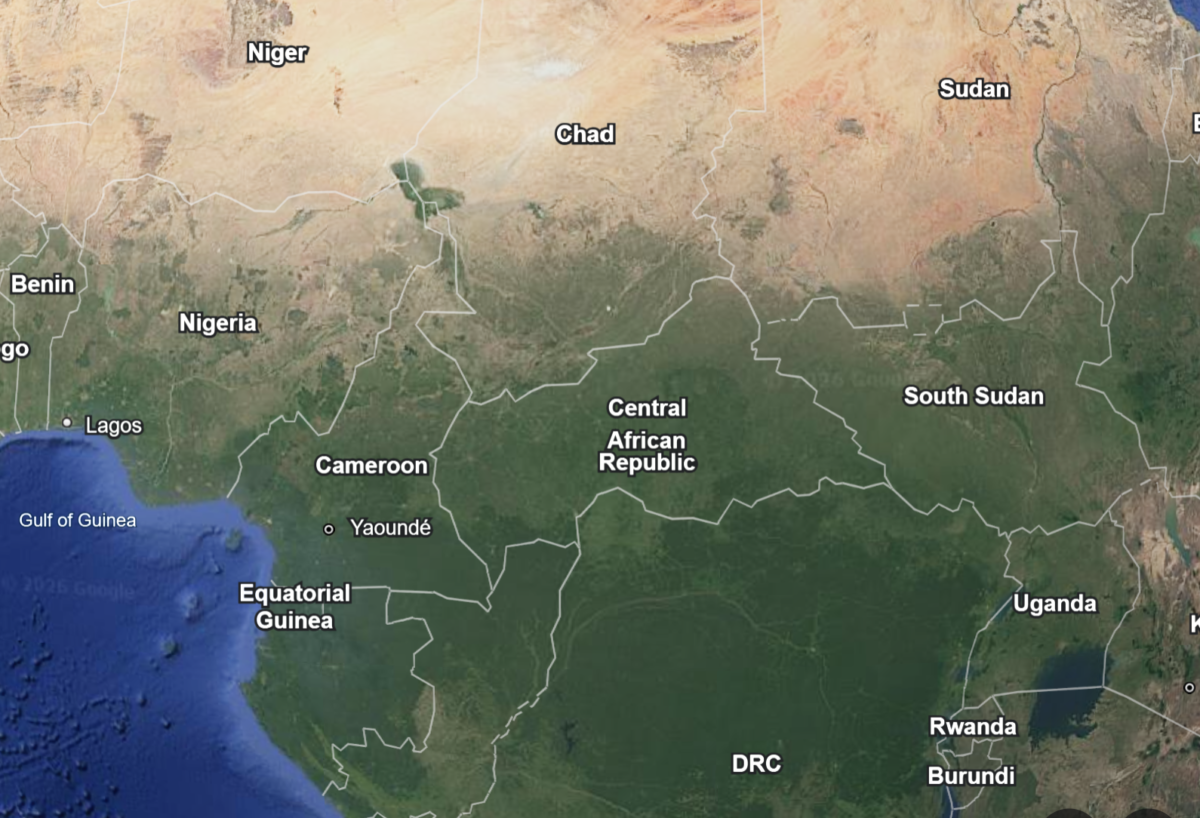
The struggle for control of the government Armed Conflict. There are many examples of armed conflict in the world today. Examined more closely this conflict is typically over control of the government or specific territory--often territory with natural resources. Thus this conflict is over who will establish control over government/territory and subsequently over control over resources, including the power to tax, arrange oil leases, and so on. In conflict, in addition to the struggle for control over resources, there is typically great harm done to ordinary people, such as murder, amputation of limbs, rape, taking of family food and other resources. (This can be so bad that an end to conflict, even if it then means establishment of an organized system of oppression, is preferable to people.) Revolution against an unjust government (see section above) also causes conflict. It is often difficult to decide if armed conflict is a way to gain resources, or a reasonable reaction against injustice, or a reasonable reaction by government to what is viewed as dismemberment of its territory. This in a particular circumstance is usually debatable, however it is possible to form an opinion based on the evidence. Were severe human rights violations in Bosnia, or Rwanda and Burundi justified for example? Who is correct, the government of Sudan or the people of Darfur? What is the current conflict in Somalia about? Armed conflict is ongoing in Sudan, principally in its Darfur region. The conflict has multiple roots and extends to Chad and the Central African Republic. Making sense of Chad by Alex de Waal (February 7, 2008) does a good job of describing the roots of the regional conflict. Also see Hunger Notes section Darfur on this region for further 2008.a and Chad. The conflict in Somalia also has ethnic and multi-country roots. See Hunger Notes section on Somalia. How is a structure of harm maintained? A key way is by controlling sources of wealth and then distributing the resulting income. Those who are responsible for maintaining the structure of power get paid. Kenyan minister resigns (temporarily) over accusations that he sold a government hotel for one-third of its value BBC News July 8, 2008 (You will leave this site) Sanctions on businessman target Syria's inner sanctum Robin Wright Washington Post February 22, 2008 (You will leave this site, be required to register once with the Post and thereafter sign in using your email address.) Guinea: Soldiers warn of more protests if demands not met. (Troops want the government to give them 300 billion CFA francs (US$77 million) President Conte allegedly promised them to end their 1996 mutiny! For now, soldiers pillage the citizenry.) IRIN August 17, 2007 (You will leave this site.) ANGOLA: From politics of disorder to politics of democratization? Steve Kibble April 23, 2006 An excellent article from last year that describes how Angola continues divided into two parts by political and economic interests--in spite of words to the contrary by the politicians. Clearing the path for the 'Scion of Egypt': Hosni Mubarak's son climbs party ranks as country's leaders undercut his rivals Daniel Williams Washington Post March 10, 2006 (You will leave this site and be required to register [once] with the Post.) One relatively unusual way to maintain a structure of harm is to isolate the seat of the government from access by citizens, as Burma has done.
Seat of power: a government building in Naypyidaw, the city that Myanmar’s junta built from scratch to replace Yangon as the capital. Naypyidaw was built in secret by the ruling generals and announced to the public two and a half years ago, when it was a fait accompli. Photo: International Herald Tribune Built to order: Burma's new capital isolates and insulates junta New York Times June 24, 2008 (You will leave this site.)
Countries have "elites" and people. Here is a description of Sudan's elite. Sudan's Unbowed, Unbroken Inner Circle Emily Wax Washington Post May 3, 2005 (You will leave this site and be required to register [once] with the Post.) A major barrier to entry is limiting access to worthwhile employment, as well as other social advantages such as education and ability to marry outside of one's class. A 'broken people' in booming India: low-caste Dalits still face prejudice, grinding poverty Emily Wax Washington Post June 21, 2007 (You will leave this site and be required to register [once] with the Post.) African-American Names Penalized During Employment Process, Study Finds Richard Morin Washington Post, August 3, 2003. (You will leave this site and be required to register [once] with the Post.) Other barriers to entry are lack of education, poor health, not being sufficiently 'presentable'--all 'natural' barriers that arise from poverty. Stopping intellectual genocide in African universities Prince Kum'a Ndumbe III University of Yaoundé, Cameroon July 18, 2007 Another way is "putting people down." Typically minorities/ordinary people have been disparaged in some way--for their supposed (lack of) intelligence, personal appearance or for some other reason. People can be marginalized because of their skin color, ethnic origin, income level or indications of same, such as names This diminishes people's sense of self-worth, and, combined with actual labor market discrimination based on the same sort of factors, is a major barrier to entry. There has been a reaction against this in many ways in many countries, but it still persists. Ethnic pageants restyle the American beauty contest Robertha Budy heard the insult when she was a little girl, and now, even at Georgia State University in Atlanta, she still hears it. "You're Liberian? Isn't that in Africa? You don't look like it. You're pretty." Darryl Fears Washington Post October 19, 2005 (You will leave this site and be required to register [once] with the Post.) International aspects/imperialism There are major international aspects to harmful economic systems. In fact many would say that international aspects are the most important. In order to focus attention on these international aspects, we mention these aspects in a separate section. However international aspects could as well have been included in specific sections above. Spain and South Africa both "gave the green light" for a failed coup in oil-rich Equatorial Guinea, British mercenary tells court BBC News June 17, 2008 (You will leave this site.) The politics of United States aid in Venezuela Tom Barry Americas Program, Center for International Policy August 7, 2007 Iran and Nicaragua in barter deal. US has warned Nicaragua that closer ties with Iran could harm its relation with Washington BBC News August 5, 2007 (You will leave this site.) Enabling the Indonesian military Conn Hallinan Foreign Policy In Focus July 18, 2007 US military involvement in Africa exists and is increasing.
Corruption as a form of gaining income for international firms is described in the Lynch article. U.N. Panel Says 2,400 Firms Paid Bribes to Iraq. Oil-for-Food Program Report Alleges $1.8 Billion in Payments Colum Lynch Washington Post October 28, 2005 (You will leave this site and be required to register [once] with the Post.) Oil-for-food scandal: key reports BBC News (You will leave this site.) The Bond article presents the idea that resource wealth has been taken from Africans to the benefit of developed countries. Dispossessing Africa's Wealth Patrick Bond November 24, 2005
The impact on development of harmful economic systems has been enormous. Try to think about some of the consequences of what has been described above. They include war, continued devastation over centuries, and control of the government and productive resources, that have left hundreds of millions confronting starvation, while those who "govern" and "own" live very well. A recipe for disaster! And we should not blame the victims--poor people across the world. Rather we should think about how we can help them. War War, caused by armed groups seeking to control the government, or territory or resources, has devastated vast regions of the world, and more importantly, vast numbers of the people of the world. Fifteen years of conflicts have cost Africa around $300 billion--equal to the amount of international aid received Oxfam International October 12, 2007 See the full Oxfam study Where is there major armed conflict now? These countries include Iraq, Afghanistan, Sudan, Somalia, and Israel/Palestine. Where has there been major conflict in the past which has abated (in varying degrees), but which has still greatly affected the society and its progress? The Democratic Republic of the Congo, Angola, Mozambique, Liberia, Rwanda, Burundi, Sri Lanka, Peru, El Salvador, Guatemala, Northern Uganda, and Colombia--to name a few. Governments, including tax collection, essential public services, and a fair judiciary, are not easily reestablished after a war (if they ever were established in the first place). How many people live lives of greatly diminished productivity (and happiness) due to conflict!
Unruly and often violent youth have set up illegal road blocks on several roads in the Rift Valley and western Kenya. Violence against local minorities including Kikuyus, Luos or Kalenjins, depending on the region of Kenya, has displaced an estimated 600,000 Kenyans to this point. Photo: IRIN Some 600,000 displaced in Kenya BBC News February 11, 2008 (You will leave this site.) The Mungiki and other Kenyan armed groups profit from chaos Josphat Makori BBC News February 8, 2008 Violence slowing down humanitarian effort IRIN February 5, 2008 (You will leave this site.) (You will leave this site.)
Sudan survivors answer your questions Amber Henshaw BBC News October 26, 2007 (You will leave this site.) Armed Conflicts Now the Leading Cause of Hunger Emergencies, FAO Says (May 23, 2005) See also the excellent earlier study by Messer, Cohen and D'Costa Armed Conflict and Hunger. Continued Devastation over Centuries The past five centuries or so have seen considerable hardship for the people living in many (now often past) societies. Africans may be taken as a key example
There has been a struggle for thousands of years by human beings in many different ways against the sort of subjugation described above. To name just one very important example, the world's religions have worked to establish a set of principles for human relationships that were very much against oppression, and though the religions were persecuted for doing so, they did manage to establish at the very least a set of guidelines for human behavior. In all countries of the world there has been a struggle against injustice, and attempts, which have met with increasing success, to establish the societal frameworks for a more just and equitable society. This is a long (and inspiring) story which we cannot recount here. The current efforts in the world to reduce harm include reducing corruption, moving to more democratic governments with established rights and processes (by means such as reducing the influence of the military and improving the fairness of elections--and having them! and reducing police brutality), and, internationally, reducing the advantages which developed nations have assigned to themselves through their control of international institutions, such as United Nations, the World Bank, and the World Trade Organization. In recent years, there have been important efforts to have elections that express the will of the people and to implement policies that reflect an electoral mandate. Nations are evolving from power structures that have been based on some combination of military, economic and political control to ones that reflect the wishes of the (often very poor) people. This evolution has not been easy. One publication that attempts to track this evolution is Freedom House's annual survey. Survey finds world freedom reduced in 2007 with one-fifth of countries showing declines Freedom House January 18, 2008 Farmer-turned-activist plants seeds of reform in China Edward Cody Washington Post June 26, 2008 (You will leave this site.) Five countries covered in somewhat more detail here include Venezuela, Bolivia, Ecuador, the Democratic Republic of the Congo, and Nigeria. The countries of Latin America are countries where a minority have, since the Colonial period, controlled the government and sources of income and wealth. Venezuela, Bolivia and Ecuador are three countries where dissatisfaction with government policies has led to voters installing more populist governments. (Others include Brazil, Argentina, and Peru.) These governments are now under severe strain as they have tried to implement policies favoring the majority. South America's constitutional battles Monte Reel Washington Post January 18, 2008 (You will leave this site, be required to register once with the Post and thereafter sign in using your email address.) The policies of the previous governments of these countries (and many others, including Brazil and Argentina) have been described as 'neo-liberal,' meaning ones that
The citizens of a country own the national resources of the country. (This may be difficult for people in the United States to understand, given that the United States has typically given these rights away to individuals and corporations in the United States.) Examples include land, mineral rights (the right to extract what lies under the land--a somewhat strange concept, as it divides up land rights, but nonetheless, one that exists in U.S. law), and the broadcast (radio, TV, and other communications) spectrum. One important issue is that these governments are attempting to improve the benefit that citizens receive from these rights. Venezuela deports two officials from Human Rights Watch Juan Forero Washington Post September 20, 2008 (You will leave this site.) Chavez has undermined democracy in Venezuela, Human Rights Watch says Juan Forero Washington Post September 19, 2008 (You will leave this site.) See full report. Venezuela 'to tax oil windfall' BBC News April 3, 2008 (You will leave this site.) Exxon Mobil acts to freeze Venezuelan oil assets; Venezuela denies full freeze BBC News February 8, 2008 (You will leave this site.) Suitcase of cash tangles US, Venezuela and Argentina in intrigue Simon Romero and Alexei Barronuevo New York Times January 9, 2008 (You will leave this site. Chavez defeated over reform vote BBC News December 2, 2007 (You will leave this site.) Voting ends on Venezuela reforms BBC News December 2, 2007 Old allies abandon Chavez as constitution vote nears Juan Forero Washington Post November 29, 2007 (You will leave this site and be required to register [once] with the Post.) More Venezuela stories Bolivia halts US anti-drug work BBC News November 2, 2008 Bolivia set for vote on new constitution BBC News October 22, 2008
A riot police officer keeps watch over residents shouting slogans outside the military airport in El Alto, where the governor of the northern province of Pando was to arrive after being detained on genocide charges. Photo: Aizar Raldes/AFP/Getty Images Negotiators inch forward in Bolivia Patrick J. McDonnell Los Angeles Times September 17, 2008 Bolivia expels US ambassador on grounds of encouraging the country's breakup BBC News September 4, 2008 (You will leave this site.) Bolivia sets date for referendum on new constitution in face of strong opposition by 5 state governors--land distribution to poor people, control of oil and gas revenues key issues BBC News August 29, 2008 (You will leave this site.)
In the mostly indigenous city of Warisata, President Evo Morales greets a crowd of several thousand people commemorating Bolivia's National Day of the Indian. Photo: Evan Abramson/Washington Post Bolivia sets date for referendum on new constitution in face of strong opposition by 5 state governors--land distribution to poor people, control of oil and gas revenues key issues BBC News August 29, 2008 (You will leave this site.) Bolivia referendum keeps both President Morales and opposition state governors in office--deep divisions continue BBC News August 12, 2008 (You will leave this site.) Bolivians to hold confidence vote on their president as he struggles to enact reform against wishes of people in some resource-rich regions of Bolivia BBC News May 9, 2008 (You will leave this site.) Court slows Bolivian reform BBC News March 8, 2008 (You will leave this site.) Wealthy neighbors need Bolivia's gas Monte Reel Washington Post February 10, 2008 (You will leave this site, be required to register once with the Post and thereafter sign in using your email address.) Bolivia tense amid autonomy push BBC News December 15, 2007 (You will leave this site.) Bolivian assembly approves new draft constitution; to be considered by voters next year BBC News December 9, 2007 (You will leave this site.) Bolivian President Morales calls for a referendum on whether he and the country's nine regional governors should stay in office BBC News December 6, 2007 (You will leave this site.) Six of Bolivia's nine provinces hold a one-day strike against a new draft constitution BBC News November 29, 2007 (You will leave this site.) Ecuador’s leader purges military and moves to expel American base Simon Romero New York Times April 21 2008 (You will leave this site.) Ecuador plans foreign bases ban, ending US base there BBC News April 2, 2008 (You will leave this site.) More military aid stories Ecuador throws down oil gauntlet Jane Monahan BBC News December 13, 2007 (You will leave this site.)
Harmful economic systems 2007 (last year's version of this page) |